How to Grow Zinnias (Beginner-Friendly Guide for Big, Colorful Blooms)
- thrivingfamilyhome
- Jul 1
- 2 min read
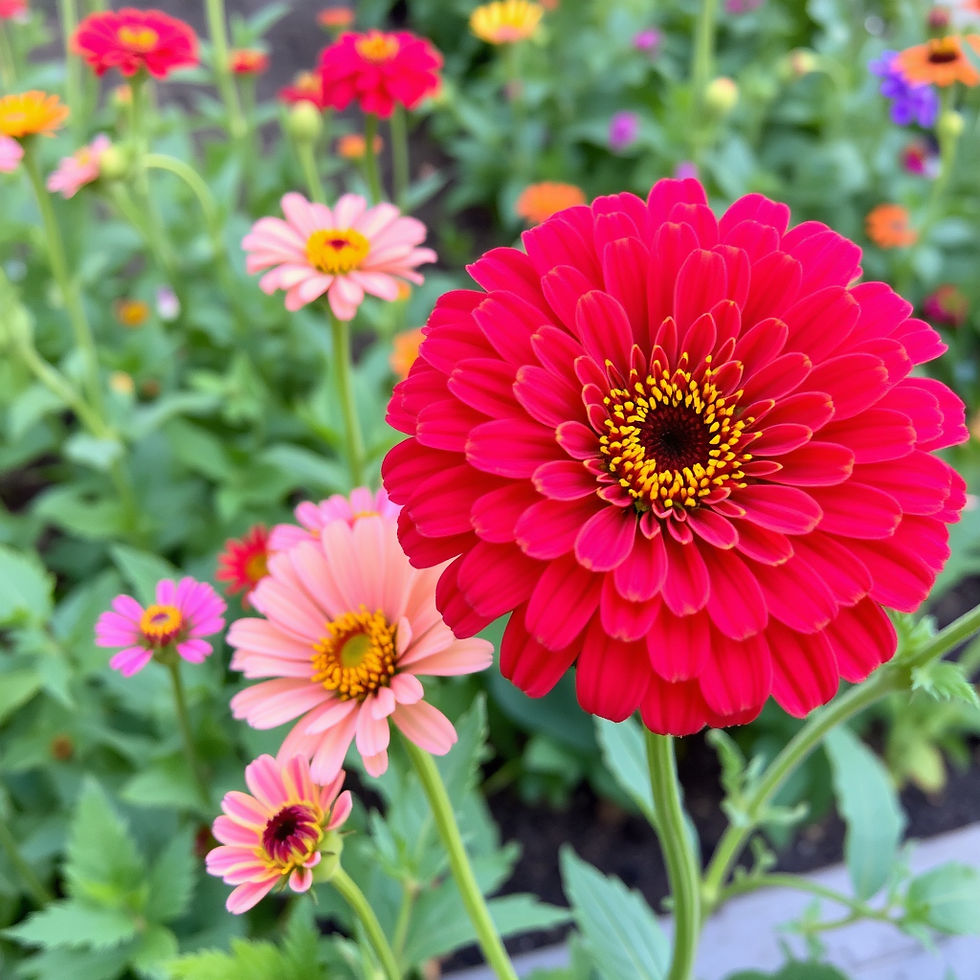
Zinnias are one of the easiest, most rewarding flowers you can grow—especially if you love bold color, long-lasting blooms, and pollinator-friendly gardens. Here’s a beginner-friendly guide to growing zinnias from seed to bouquet, with simple tips that make a big difference.
Why zinnias are a beginner favorite
Fast to bloom (often 6–8 weeks from seed)
Heat-loving and drought-tolerant once established
Great cut flowers that keep blooming when you harvest
Loved by butterflies and other pollinators
When to plant zinnias
Zinnias are warm-season annuals. Plant them after your last frost date, once the soil has warmed. In most areas, that’s late spring through early summer.
If you want earlier blooms, you can start seeds indoors 3–4 weeks before your last frost, but zinnias also do beautifully when direct-sown.
Where to plant: sun + airflow
For the healthiest plants and the most flowers, choose a spot with full sun (6+ hours). Good airflow is key because zinnias can be prone to powdery mildew in humid conditions.
Soil prep (simple is fine)
Zinnias aren’t fussy, but they do best in well-draining soil. Before planting, loosen the top 6–8 inches and mix in a little compost if you have it. Avoid heavy, soggy areas.
How to plant zinnia seeds
Plant seeds about 1/4 inch deep.
Space seeds 6–12 inches apart depending on the variety (taller types need more room).
Water gently after planting and keep the soil lightly moist until seedlings emerge (usually 5–10 days).
Watering + feeding
Water at the base of the plant to keep leaves dry. Once established, zinnias prefer deep, less frequent watering rather than daily sprinkles.
If your soil is reasonably healthy, you may not need fertilizer. Too much nitrogen can mean lots of leaves and fewer blooms. If you do feed, use a balanced, low-nitrogen option sparingly.
Pinching for bushier plants (optional but worth it)
When seedlings are about 8–12 inches tall, you can pinch the growing tip (right above a set of leaves). This encourages branching, which means more stems and more flowers.
Keeping zinnias blooming all season
Deadhead spent blooms to encourage new flowers.
Cut flowers often—harvesting is one of the best ways to keep plants producing.
Succession sow every 2–3 weeks for continuous blooms through late summer.
Common problems (and easy fixes)
Powdery mildew: Give plants space, water at the base, and avoid overhead watering.
Leggy plants: They need more sun—move or replant in a brighter spot next time.
Few blooms: Ease up on fertilizer and make sure they’re getting full sun.
A simple zinnia variety guide
Tall for cutting: Benary’s Giant, California Giants
Compact for borders/containers: Zahara, Profusion
Unique shapes: Cactus-flowered types, scabiosa-flowered types
Final tip: plant more than you think you need
Zinnias are the kind of flower that makes you wish you’d planted a bigger patch. A small row can turn into armfuls of color for your garden and your home—plus, the pollinators will thank you.



Comments